


Risk Warning:CFDs are complex, high-risk leveraged products. You can lose money rapidly, only trade if you understand the risks involved.

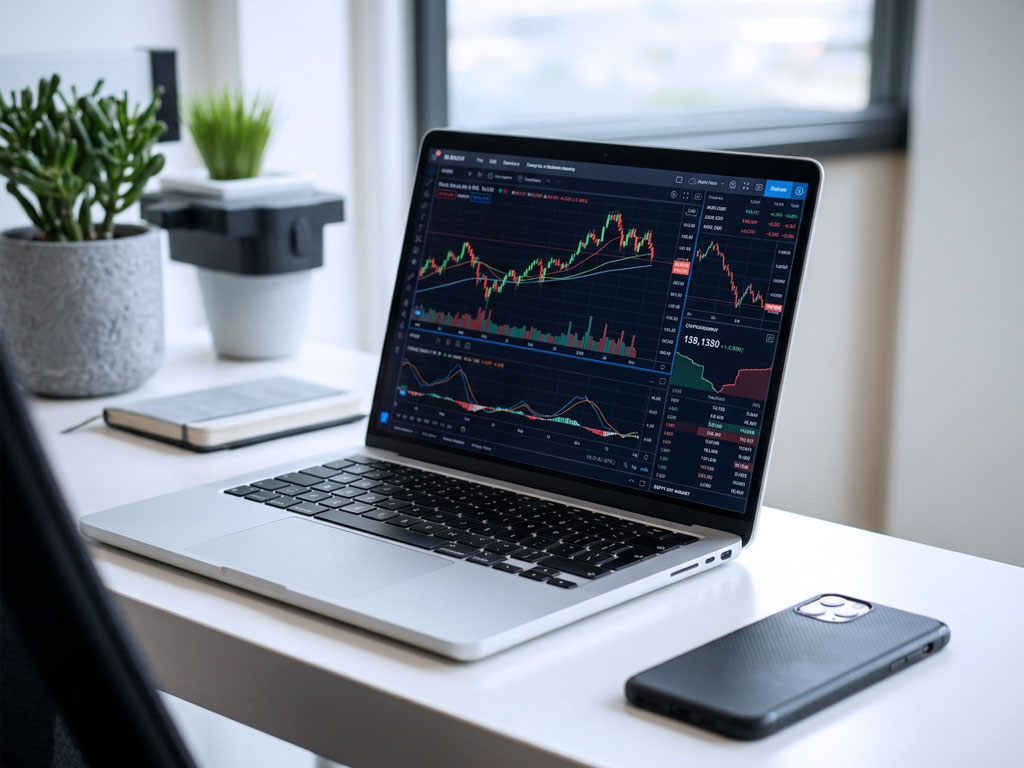
Trader studying the markets
Our Education Hub is currently under development. In the meantime, explore a preview of our anticipated offerings below, and check back soon as new content is added.

Learn the Markets  Before You Trade

Build a stronger foundation through practical trading education, market knowledge, and risk awareness designed for developing traders.

Successful trading starts with understanding how markets work. The ZR Markets Education Hub provides accessible learning resources covering market fundamentals, trading products, analysis techniques, platform tools, and risk management to help traders make more informed decisions.

Beginner Friendly
Beginner Friendly
Start with the fundamentals of global financial markets and trading concepts.
Practical Learning
Practical Learning
Learn through clear, structured educational content designed for everyday traders.
Risk Awareness
Risk Awareness
Develop responsible trading habits and understand the importance of managing risk.

Knowledge Comes Before Opportunity

Financial markets move quickly, influenced by economic data, central bank decisions, global events, and changing market sentiment. Understanding these factors can help traders better navigate market conditions and identify potential opportunities.

For developing traders, education provides the foundation for informed decision-making. By learning how markets work, how risk is managed, and how trading products behave under different conditions, traders can approach the markets with greater discipline, awareness, and preparation.

Understand the products you trade

Learn how leverage and margin work

Apply effective risk management principles

Develop a structured trading approach

Practise using a demo trading account

Avoid emotional trading decisions

Start With the Basics

If you are new to trading, it is important to build knowledge step by step. The beginner learning path introduces the essential ideas every trader should understand before participating in live markets.

01

What Are Financial Markets?

Financial markets allow participants to buy and sell instruments linked to currencies, shares, indices, commodities and precious metals. They help reflect changing expectations about economies, companies, interest rates, inflation and global events.

02

What Are CFDs?

CFDs, or Contracts for Difference, allow traders to speculate on price movements without owning the underlying asset. Because CFDs are leveraged products, they involve significant risk and may not be suitable for all investors.

03

What Is Forex Trading?

Forex trading involves exchanging one currency for another. Pairs such as EUR/USD, GBP/USD and USD/JPY move based on interest rates, economic performance, central bank policy, political developments and global sentiment.

04

What Are Precious Metals?

Gold and silver are widely followed by traders and investors. Gold is often viewed as a market of interest during periods of uncertainty, inflation concern or shifts in interest rate expectations. Silver can be influenced by both investment and industrial demand.

05

What Are Indices?

Indices represent the performance of a group of shares from a particular market or sector — useful for tracking broader market sentiment, economic expectations, and overall market performance rather than a single company's results.

06

What Are Commodities?

Commodities include energy, metals and agricultural products. Prices may be influenced by supply and demand, weather, geopolitical events, production levels, global economic activity, and investor sentiment worldwide.

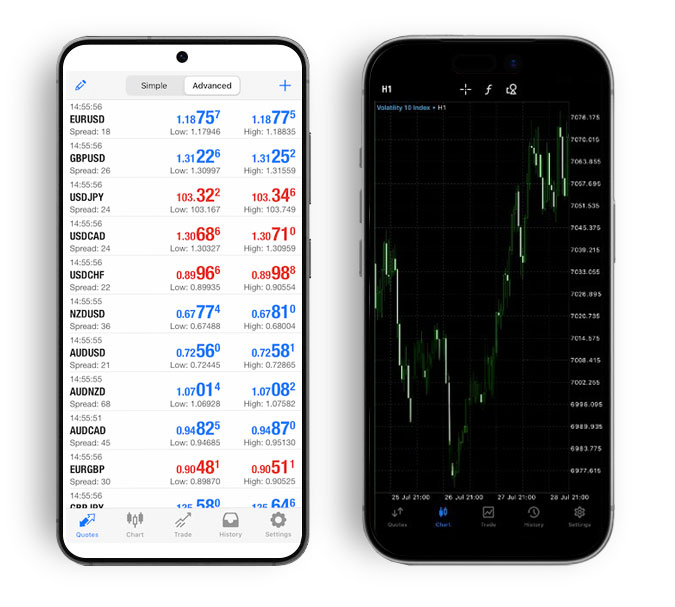
FX trading dashboards
FLAGSHIP

FX CFDs

FX CFDs provide access to global currency markets. Traders can follow major, minor and selected currency pairs while monitoring economic data, interest rate expectations and central bank decisions.

Forex markets are highly liquid and active. However, currency prices can move quickly during major news events and periods of uncertainty.

KEY LEARNING TOPICS

Currency pairsBid and askSpreadsPipsLotsMajor / minor / exoticEconomic newsCentral bank policy
Gold and silver bullion
FLAGSHIP

Precious Metal CFDs

Precious metal CFDs trading focuses primarily on gold and silver. These markets are closely watched by traders because they can respond to inflation expectations, currency movements, geopolitical uncertainty and changes in investor confidence.

KEY LEARNING TOPICS

Gold basicsSilver basicsSpot pricesVolatilitySafe-haven demandUS dollar influenceInflation expectationsInterest-rate sensitivity

Explore Opportunities Across Global Markets

Share CFDs, Index CFDs, and Commodity CFDs offer access to a broad range of market opportunities beyond traditional currency trading. Explore global companies, market benchmarks, and commodity sectors through a single trading environment designed for today's traders.

Essential Trading Terms

A practical glossary organised by experience level — from the fundamentals every new trader must master through to the risk and structural concepts used by professionals every day.

Spread

The difference between the buy (ask) and sell (bid) price of an instrument — the basic cost of opening a new trading position.

Pip

The smallest standard price increment in forex — typically the fourth decimal place on most major currency pairs.

Lot

A standardised trade size. One standard lot equals 100,000 units of the base currency in FX.

Bid / Ask

Bid is the price the market will buy from you; ask is the price the market will sell to you.

Long / Short

Going long profits if price rises; going short profits if price falls.

Take-Profit

An order that closes a position automatically when the market reaches a target price.

Risk Management Comes First

Risk management is one of the most important parts of trading education. Markets can move unexpectedly, and leveraged products can result in rapid losses.

A responsible trader should understand how much capital is at risk before entering a trade — including position size, leverage, stop-loss levels, market conditions and the possibility of unexpected volatility.

Risk management does not eliminate risk, but it helps traders approach the market with structure and discipline.

Risk Principles

  • 01Never trade without understanding the product
  • 02Understand the risks before every trade.
  • 03Understand leverage before trading live
  • 04Avoid risking too much on one trade
  • 05Use stop-loss orders where appropriate
  • 06Avoid emotional trading decisions
  • 07Review trades regularly
  • 08Practise on demo before trading live

Two Ways to Read the Market

Technical Analysis

Technical analysis studies price charts, patterns and indicators. Traders use it to identify support, resistance, trends, momentum and price behaviour.

COMMON TOOLS

Candlestick chartsTrend linesSupport / resistanceMoving averagesRSIMACDChart patternsPrice action

Fundamental Analysis

Fundamental analysis studies economic, political and financial factors that may influence market prices.

EXAMPLES

Interest-rate decisionsInflation dataEmployment reportsGDP growthCentral bank speechesCorporate earningsGeopolitical eventsCommodity supply

Balanced Approach

Many traders use both technical and fundamental analysis. Technical analysis can help identify price structure, while fundamental analysis can help explain why markets may be moving.

Discipline Matters as Much as Strategy

Trading psychology refers to the emotional and behavioural side of trading. Fear, greed, impatience and overconfidence can all affect decision-making.

Even traders with strong market knowledge can make poor decisions if they do not manage emotions effectively.

Common Challenges

  • Entering trades too quickly
  • Holding losing trades too long
  • Closing winning trades too early
  • Overtrading after a loss
  • Increasing risk after a win
  • Ignoring a trading plan
  • Trading on emotion not analysis

Better Habits

  • Create a trading plan
  • Set risk limits
  • Keep a trading journal
  • Review mistakes objectively
  • Take breaks when needed
  • Avoid revenge trading
  • Focus on process, not only outcomes

Practise Before Trading Live

A demo account allows new traders to explore the platform and practise trading in a simulated environment. It can help traders understand order types, chart tools, price movements and platform functions before using real funds.

Demo trading is useful for learning, but it does not fully replicate the emotional pressure of live trading. Treat demo practice seriously and use it to build confidence, discipline and familiarity with the trading process.

No risk
Practise without real funds
Full charts
All MT5 charting tools
Live pricing
Real market feed
Order types
Test every order type
MetaTrader 5 platform interface

Learn the MetaTrader 5 Platform

MetaTrader 5 is one of the world's most widely used trading platforms, providing access to global financial markets through desktop and mobile devices. Designed for traders of all experience levels, it combines powerful charting tools, market analysis features, and flexible order management in a single platform.

PLATFORM FEATURES

  • Advanced Charting Tools
  • Technical Indicators
  • Flexible Order Types
  • Market Watch & Quotes
  • Position Management
  • Desktop & Mobile Access

WHY TRADERS USE MT5

  • User-Friendly Interface
  • Multi-Asset Trading
  • Real-Time Market Data
  • Customisable Charts
  • Professional Trading Tools
  • Global Market Access

Common Mistakes New Traders Should Avoid

1

Trading Without a Plan

Entering the market without a clear plan can lead to emotional and inconsistent decisions.

2

Using Too Much Leverage

Leverage increases exposure but increases risk. Traders understand leverage before trading.

3

Ignoring Risk Management

Risk management should be considered before every trade.

4

Chasing the Market

Entering trades after large price moves without analysis can increase the risk of poor timing.

5

Overtrading

Taking too many trades can reduce discipline and increase transaction costs.

6

Ignoring Economic News

Major news releases can create sharp market movements.

Educational Categories

A comprehensive educational framework designed to guide developing traders through the core pillars of market knowledge, strategic analysis, and risk discipline.

Beginner Trading

Understanding how financial markets operate, the role of different asset classes, and the key concepts every trader should know before getting started.

Risk Management

Learn the importance of position sizing, risk control, and capital preservation when participating in financial markets.

Market Analysis

Explore the foundations of technical and fundamental analysis used to understand market behaviour and price movements.

Trading Psychology

Discover how emotions, discipline, and decision-making can influence trading performance over time in changing markets.

Trading Platforms

Learn the essential functions of MetaTrader 5, including charting tools, indicators, order management, and platform navigation.

Market Products

Understand the characteristics of FX CFDs, Precious Metals CFDs, Share CFDs, Indices CFDs and Commodities CFDs.

Frequently Asked Questions

Common questions from new and developing traders.

Start Learning
Trade Responsibly

Build your knowledge, understand the risks, and practise with the tools designed to help you approach global markets with confidence.